Start a new quote
New customer to Sun Coast? You are in the right place. Select a product below to get started.
New customer to Sun Coast? You are in the right place. Select a product below to get started.

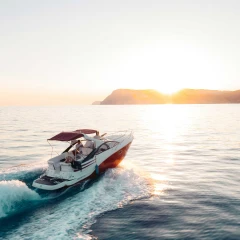











Outboard motors are built to operate in some of the harshest environments—saltwater, sun exposure, humidity, and temperature swings. But the time they’re not running is often when the most damage can occur. Proper storage-focused maintenance is one of the most important (and overlooked) parts of outboard motor ownership.
This pillar guide covers everything boat owners need to know about maintaining outboard motors for storage, whether that storage lasts a few weeks or several months. It’s designed to give you a strong foundation, with deeper guides—like fogging and restarting—handled in supporting articles.
Disclaimer: The information provided in this article is for general educational purposes only and is not intended as professional mechanical, legal, or boat insurance advice. Boat maintenance procedures, manufacturer recommendations, and insurance coverage options can vary based on vessel type, engine manufacturer, location, and individual policy terms. Always consult your owner’s manual, a qualified marine professional, or your insurance provider for guidance specific to your situation. Coverage availability and requirements may differ by policy and carrier.
Outboard motors don’t typically fail while running—they fail after sitting. Moisture intrusion, corrosion, fuel degradation, and internal wear often happen quietly during periods of inactivity.
Proper storage maintenance helps:
Whether you boat year-round or seasonally, storage prep plays a major role in reliability.
Not all storage situations are equal. How and where your outboard sits determines how aggressive your maintenance approach should be.
Before any storage period:
This is especially important for saltwater boats, where corrosion can accelerate quickly.
Storage is the best time to:
Minor problems are easier to fix before storage than after.
Fuel-related issues are one of the most common causes of post-storage engine trouble.
Fuel left untreated can degrade, gum up injectors, and cause hard starts.
Even when an engine is off:
This is where fogging plays an important role.
Fogging coats internal engine components with protective oil to help prevent corrosion during storage. It’s commonly performed during seasonal or long-term storage and is covered in detail in a dedicated fogging guide.
This article assumes fogging is part of a complete storage plan, not a standalone solution.
Whenever possible:
Storing an engine tilted up can allow moisture to pool in places it shouldn’t.
Storage method doesn’t eliminate the need for engine protection.
Before storage:
This includes bolts, steering linkages, and exposed fasteners.
Saltwater engines face:
Saltwater boaters should treat corrosion prevention as non-negotiable.
Outboard reliability isn’t just about the engine block.
A healthy engine won’t start without healthy electrical components.
After storage, engines often:
This is normal—especially if internal protection steps were taken during storage. Restarting procedures are covered more deeply in a separate recommissioning and de-fogging guide.
Storage-related damage caused by:
May not be treated the same as sudden accidental damage under a boat insurance policy. While coverage varies by policy and carrier, proper maintenance can help reduce the risk of avoidable issues that may fall outside typical coverage scenarios.
The most reliable outboards aren’t always the newest—they’re the best maintained.
Good storage habits:
Storage maintenance isn’t about perfection—it’s about consistency.
Running an outboard motor is only part of ownership. Knowing how to store and protect it properly is what keeps it reliable season after season. By understanding storage types, internal protection, fuel care, and corrosion prevention, boat owners can dramatically reduce avoidable engine problems.
This guide serves as a foundation—supporting more detailed articles on fogging, de-fogging, and seasonal recommissioning that build a complete outboard motor maintenance ecosystem.