Hawaii Yacht Insurance

Protect Your Vessel in Hawaii

Hawaii occupies a singular position in the world of yachting. The islands sit in the middle of the Pacific Ocean, surrounded by some of the most demanding open-water sailing conditions anywhere on earth — and also some of the most beautiful.

Yacht ownership in Hawaii is different from ownership in the continental US. The ocean environment, the inter-island passages, and the remoteness from the mainland supply chain all shape the insurance picture.
Person fishing from the front of a boat named The Fish Tank on calm open water under a clear sky.
Let's Break It Down

Is Yacht Insurance Required in Hawaii?

Yes — Hawaii is one of the few states with a legal insurance mandate for recreational vessels. State law requires boats and yachts 26 feet or longer to carry at least $100,000 in coverage for the removal and salvage of a grounded or sunken vessel. Since most yachts exceed 26 feet, this requirement applies to the vast majority of yacht owners in Hawaii.

In addition, Hawaii's Division of Boating and Ocean Recreation (DOBOR) requires proof of insurance for any vessel mooring at a state-owned harbor facility. DOBOR manages the state's small boat harbors — including Ala Wai, Keehi Lagoon, Kaneohe Bay, Maalaea, and Lahaina — and berth agreements at these facilities require liability coverage as a condition of your slip.

Private marina operators and yacht clubs throughout the islands impose their own coverage requirements on top of the state minimums. Given Hawaii's ocean environment and the genuine cost of wreck removal in island waters, meeting only the legal minimum is rarely sufficient for a vessel of real value.

Build your coverage

What Yacht Insurance Can Cover in Hawaii

A standard yacht policy bundle usually includes:
Icon of a shield

Liability Coverage

Help cover bodily injury or property damage you cause to others. Hawaii's harbor environments — Ala Wai, Kaneohe Bay, Maalaea — mix recreational vessels, charter boats, commercial traffic, and inter-island ferries. Liability coverage may apply in collision and other incidents involving third parties.
Learn more
Icon of a shield with a USD symbol on it

Hull Coverage

Help pay to repair or replace your yacht following a covered loss. Ocean operation in Hawaii creates physical damage exposure that differs significantly from mainland sailing — saltwater corrosion, swell exposure, and the cost of parts and labor in Hawaii (shipping to the islands significantly increases repair costs) make hull coverage essential.
Learn more
Icon of a thunderstorm with the moon behind it

Agreed Value Coverage

Pays the stated insured value at the time of loss without depreciation. For Hawaii, where a total loss or major repair can involve significant shipping costs for parts and potentially the vessel itself, agreed value is worth discussing with your agent.
Learn more
Icon of a shield with a USD symbol on it

Medical Payments

Help cover medical expenses for you or your guests following an on-water accident. Response times in some Hawaii sailing areas can be extended — inter-island passages and more remote anchorages on the leeward sides of islands are far from trauma facilities.
Learn more
Icon of a radar

Ocean and Offshore Coverage

Inter-island passages and open-ocean operation. Confirm your policy explicitly covers Hawaii's ocean sailing environment — standard policies may be written for coastal or inland waters and may not automatically extend to blue water passages.
Icon of a boat on a trailer

Towing Coverage

With some policies boat towing coverage is included. This coverage will reimburse the reasonable cost (up to the limit purchased).


Learn more
Where do we serve?

Hawaii's Yacht Sailing Environment

Oahu — Ala Wai and Kaneohe Bay

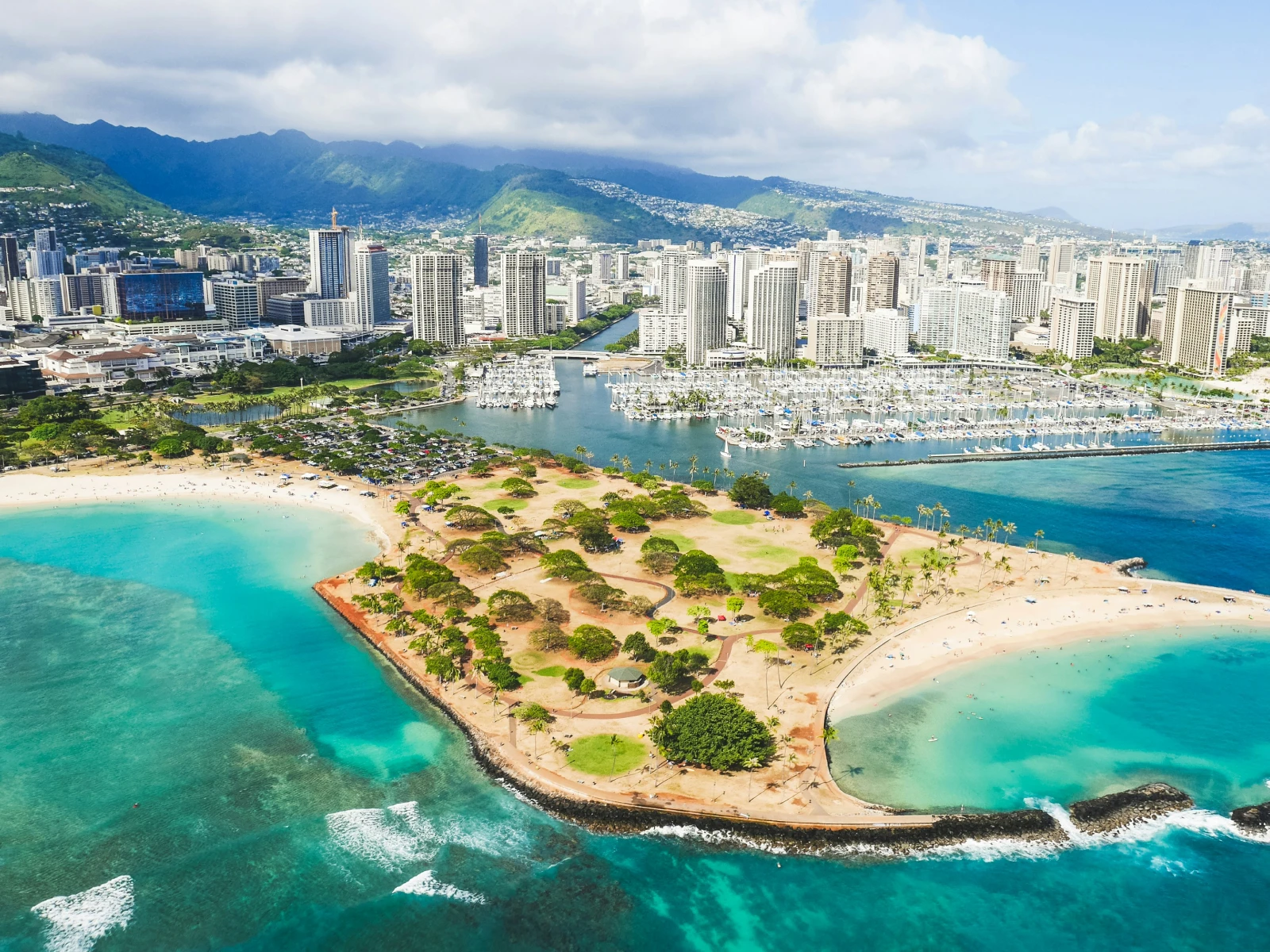
The Ala Wai Small Boat Harbor in Honolulu is the primary sailing hub in Hawaii, with over 700 slips and a well-established racing community. The waters off Waikiki and Diamond Head are the venue for Transpac finish line celebrations and regular offshore racing. Kaneohe Bay on Oahu's windward side offers protected anchorage and is popular for weekend sailing — its barrier reef provides shelter from the northeast trades.

Maui — Maalaea and Lahaina

Maalaea Bay is known for its consistent and sometimes fierce winds — it's been called one of the windiest places in the world when the Maui conditions align. Lahaina Roads on the leeward side provide calmer anchorage with the iconic West Maui Mountains as a backdrop. The Maui Channel between Maui and Lanai/Molokai is a significant crossing that requires preparation and experience.

The Neighbor Islands

Each island has its own approach and character. The Big Island's Kona coast is the most accessible on the leeward side. Kauai's Na Pali Coast is one of the most dramatic sailing environments on earth — also one of the most restricted and weather-sensitive. Molokai's south coast offers remote anchorages that require careful planning.

Inter-Island Passages

The channels between the Hawaiian Islands — the Kaiwi Channel (Oahu to Molokai), the Pailolo Channel (Molokai to Maui), the Alenuihaha Channel (Maui to the Big Island) — are serious offshore passages. The Alenuihaha in particular is known for extreme conditions: channeled trade winds and opposing swells create conditions that regularly challenge experienced offshore sailors. These are open-ocean passages, not coastal hops, and your insurance should reflect that.
Important Points

Hawaii-Specific Considerations

Many standard yacht policies are written with navigation territory limitations — offshore limits of 50, 100, or 200 miles from shore. Hawaii's inter-island passages technically occur in open ocean. Confirm your policy explicitly covers Hawaii inter-island sailing and any offshore exposure you intend. Also, consider:

Trans-Pacific Arrivals and Departures

Hawaii is a common waypoint for trans-Pacific passages — west to Japan, New Zealand, and Fiji; east back to California. If you're completing or staging a passage of this scale, your policy needs to cover open-ocean navigation explicitly. Discuss blue water coverage with your Sun Coast agent.

Repair and Parts Costs

Everything in Hawaii costs more when it comes from the mainland — parts, materials, skilled labor. A major repair that costs $15,000 in California may cost significantly more in Hawaii when shipping, delays, and local labor rates are factored in. This makes agreed value coverage and adequate insured value especially important.

Saltwater Corrosion

Hawaii's ocean environment accelerates corrosion in ways that mainland freshwater or coastal sailing does not. Electrical systems, rigging, and hardware all require more frequent replacement. Physical damage coverage may apply to some corrosion-related losses — confirm your policy's corrosion provisions with your agent.

Hurricane and Tropical Storm Exposure

Hawaii's hurricane season runs June through November. Direct hits are less frequent than in the Atlantic basin, but tropical storms can affect conditions significantly. Physical damage coverage for named storm events should be confirmed.
Support

Got questions?

We have answers for you on all things insurance.
Does my Ala Wai slip require insurance?
Yes. DOBOR berth agreements at Ala Wai and other state small boat harbors require proof of liability insurance. Confirm the specific minimum requirements for your slip.
Are inter-island passages covered under a standard yacht policy?
Not automatically. Navigation territory provisions vary by policy. Confirm with your Sun Coast agent that your policy explicitly covers inter-island passages, which occur in open ocean.
Does Sun Coast cover trans-Pacific voyages from Hawaii?
Extended offshore and international passages require specific discussion. Sun Coast can help structure coverage appropriate for the navigation you're planning.
How does shipping cost affect my coverage in Hawaii?
Agreed value coverage pays the stated insured value at the time of loss, which can include factoring in Hawaii-specific replacement costs. Discuss your agreed value amount with your agent to make sure it reflects the actual cost of replacing your vessel in Hawaii.
Can I get coverage that includes both my Hawaii yacht and passages back to the mainland?
Yes. Sun Coast policies can be structured to cover your full navigation territory — Hawaii waters, inter-island passages, and passages to the continental US.

Get a Quote for Hawaii Yacht Insurance

Sun Coast writes yacht coverage for owners throughout Hawaii — from the Ala Wai and Kaneohe Bay on Oahu to Maui, Kauai, and the Big Island.
Are you an existing customer?

Call (800) 300-8838

Stern of a white sailboat with a red life buoy and ropes floating on calm blue water.