Start a new quote
New customer to Sun Coast? You are in the right place. Select a product below to get started.
New customer to Sun Coast? You are in the right place. Select a product below to get started.

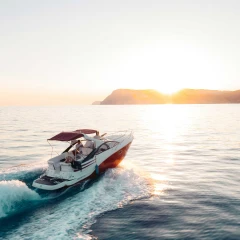











Buying your first boat is exciting. It’s easy to picture long weekends offshore, entertaining friends, or upgrading straight into a 32-foot center console.
But when it comes to your first boat, smaller is often smarter.
Many first-time buyers enter the market looking at 30+ foot vessels — and are surprised to learn that boat insurance, training requirements, and operating costs can quickly become overwhelming.
For most new boaters, a vessel 26 feet or less is often the better place to start.
Disclaimer: The information in this article is for general educational purposes only and is not financial, legal, or insurance advice. Insurance eligibility, premiums, and underwriting requirements vary based on vessel size, experience, location, and carrier guidelines.
We are seeing more first-time buyers entering the market looking at boats 32 feet and larger.
Here’s the challenge:
For new operators with little experience, insurance carriers may require:
Professional captains often charge $150 per hour or more, meaning required training alone can cost thousands of dollars before you even leave the dock.
In some cases, coverage may be limited or difficult to place altogether.
That surprises many new buyers.
For someone just entering boating, a smaller vessel offers several advantages.
Smaller boats generally:
This makes the entry point into boating more manageable.
A 22–26ft boat is:
Confidence builds faster when you’re learning on a manageable platform.
Larger boats often mean:
All of that increases exposure.
Starting smaller allows you to develop seamanship skills gradually.
Bigger boats typically mean:
Maintenance costs scale quickly with size.
A smaller vessel helps you understand ownership responsibilities without being financially overwhelming.
Let’s say two first-time buyers enter the market:
Buyer A likely secures insurance smoothly and begins building operating experience immediately.
Buyer B may be required to complete dozens of hours of paid captain-supervised training before coverage is approved — potentially adding $6,000–$9,000 in upfront costs.
That difference alone often changes the equation.
Most experienced boat owners will tell you:
Your first boat is rarely your last.
Starting with a 20–26ft vessel allows you to:
Then, when you’re ready to upgrade, you’ll be a more insurable and confident operator.
While a larger boat may look appealing at first, a 26-foot or smaller vessel is often the smarter choice for first-time buyers.
You’ll likely benefit from:
Boating should be enjoyable — not financially stressful.
Before purchasing your first boat, it’s smart to explore insurance options.
Understanding potential coverage requirements ahead of time can help you:
Request a marine insurance quote today and make sure your first boat purchase sets you up for success on the water.