Start a new quote
New customer to Sun Coast? You are in the right place. Select a product below to get started.
New customer to Sun Coast? You are in the right place. Select a product below to get started.

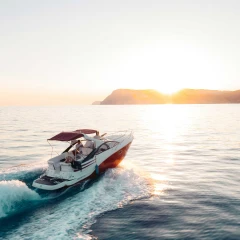





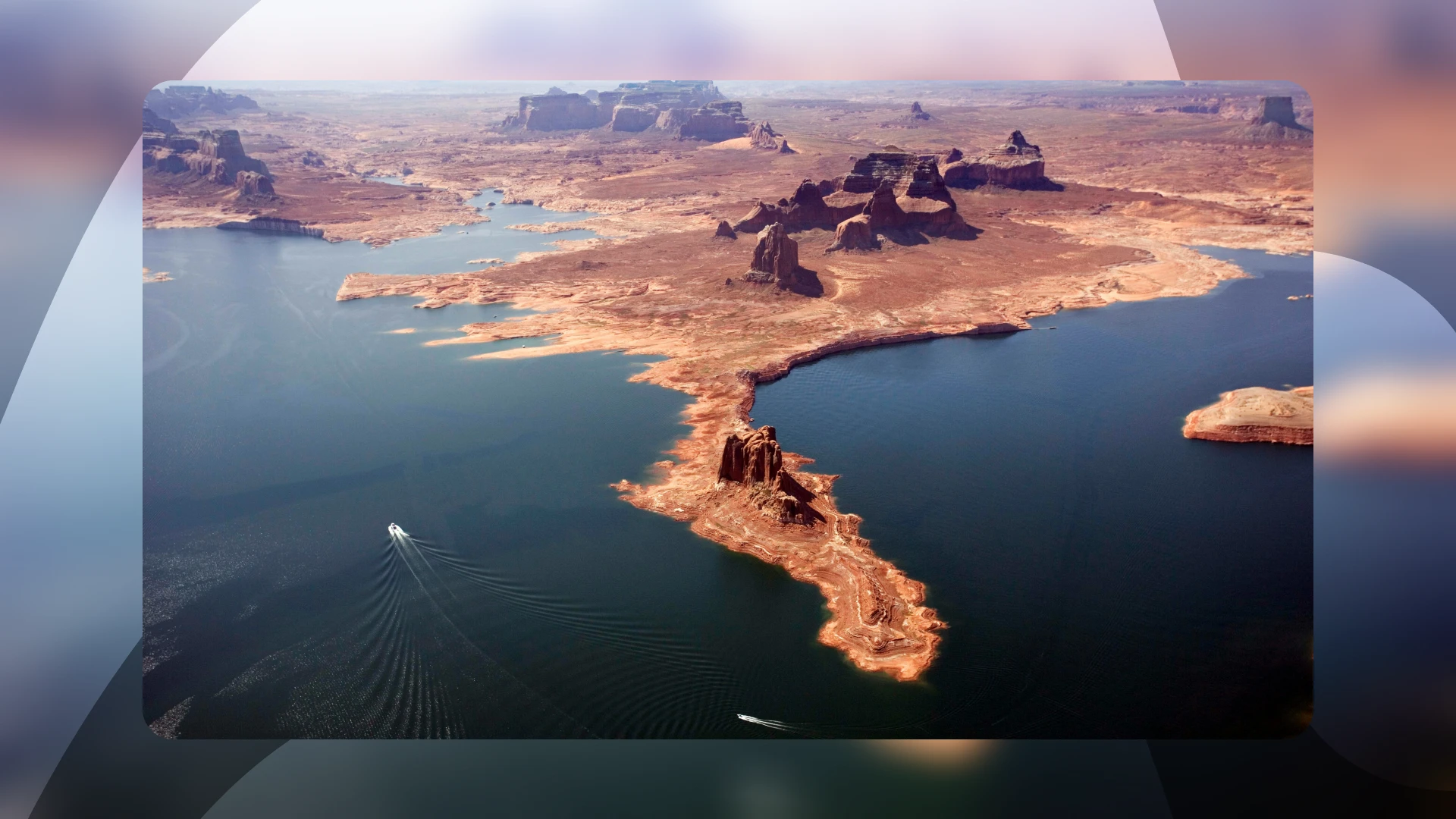

Lake Powell is one of the most distinctive boating destinations in the country. Almost 2,000 miles of shoreline, hundreds of slot canyons, water that swings between Utah and Arizona depending on which cove you wake up in, summer monsoons that build out of clear sky in 30 minutes, and a houseboat fleet that ranges from 40-foot family rentals up to 75-foot luxury vessels. The lake is also unforgiving in ways that catch even experienced boaters off guard — fluctuating water levels expose new hazards every season, sandbars shift between visits, and the slot canyons that make Powell beautiful become flash-flood corridors during summer storms. Houseboat insurance on Lake Powell has to account for all of it. This guide walks through what coverage actually needs to look like, what drives the cost, and what the experienced Powell brokers actually price for.
Disclaimer: This article is for general educational purposes only and is not insurance advice. Houseboat insurance coverage, pricing, requirements, and claim outcomes can vary by carrier, policy form, vessel, marina, location, and use. Always review your actual policy and speak with a licensed insurance professional to understand what coverage may apply to your specific Lake Powell houseboat.
A Lake Powell houseboat is not a boat that happens to have a kitchen. It is a slow, high-windage, flat-bottomed floating residence with a 20-by-50-foot footprint, multiple deck levels, a hot tub on the roof, generators, fuel tanks, fresh water tanks, holding tanks, slide-outs, awnings, and a tender boat trailing behind. The exposure profile has more in common with a small condo than a recreational boat — except the whole thing is on water that can drop ten feet between seasons.
Houseboat policies are written on dedicated forms that account for the specifics: hull and structure coverage, on-board appliance and systems coverage, generator and engine breakdown, named-storm coverage, tender and toy coverage for everything trailing behind it, personal effects, fuel spill and pollution, towing and salvage, P&I-style liability, and uninsured boater. The right policy reflects the way the boat is actually used on Lake Powell specifically — long anchor-out stretches in remote coves, frequent moves between marinas, summer-monsoon exposure, and the specific hazards of the lake bottom.
Several lake-specific factors that shape underwriting and pricing on Powell:
Fluctuating water levels. Lake Powell has experienced significant water-level swings over the last two decades. As the lake drops, new sandbars surface, previously submerged rocks become navigation hazards, and historical bottom charts go stale. Houseboats grounding on newly exposed structure is one of the most common claim categories on Powell. Carriers price for it.
Summer monsoon weather. From mid-July through early September, the Powell region sees rapid afternoon thunderstorm development. Storms can produce 40-plus-knot winds, lightning, hail, and flash flooding into the slot canyons in 20 to 40 minutes from clear-sky conditions. A houseboat anchored in a side canyon during a monsoon event can be in serious trouble. Coverage for storm damage and lightning is essential.
Slot canyon flash flooding. Anchoring overnight in a slot canyon is a Powell tradition. It is also where the most dramatic flash flood damage occurs, both to the boat itself and to anything tied off to the canyon walls. Owners and renters alike sometimes underestimate how much water can move through a narrow canyon during a monsoon event miles upstream.
Remote operating territory. Powell is large, and the lake's marinas (Wahweap, Bullfrog, Antelope Point, Halls Crossing, Dangling Rope fuel-only) are spread out. A breakdown 40 nautical miles from your home marina is not a quick tow back. Towing and on-water assistance coverage matters more on Powell than on a smaller, more concentrated lake.
Wahweap and Bullfrog are different markets. Houseboats based at Wahweap (Arizona side, near Page) operate in different conditions than houseboats based at Bullfrog (Utah side, more remote). Carriers underwrite slightly differently depending on where the boat slips. Both work, but the rating reflects the differences.
Seasonality and off-season storage. Powell is a heavy-summer-use lake with limited winter activity for most owners. How and where the boat is stored from October through April affects the premium — slip storage at a covered facility rates differently than dry storage at a private property or anchor-out year-round.
A standard Lake Powell houseboat policy may include:
Depending on how the houseboat is used, additional coverage worth considering includes:
Houseboat insurance on Powell typically runs between 1% and 3% of insured hull value annually for owner-operated pleasure-use vessels, with the average landing around 1.5% to 2%. Premium ranges depend on:
A $250,000 houseboat at Wahweap typically runs $3,750 to $7,500 per year. A $500,000 boat at Bullfrog typically runs $7,500 to $15,000 per year. Larger and newer houseboats trend toward the lower end of the percentage range. Charter and rental fleets are priced differently and require their own rating discussion.
The number that actually matters is the one a marine broker quotes against your specific operation. Generic recreational boat policies almost always get Powell houseboat pricing wrong because the lake-specific exposures are not on a standard form.
The real claims Powell owners file include:
Each of these is a real claim pattern on Powell. The right policy responds to each of them on its specific form, with limits sized for the lake's realities.
Houseboat insurance on Powell is built for:
We work with multiple specialty marine markets that actively write Powell houseboats. We understand the lake-specific exposures — fluctuating levels, monsoon weather, slot canyon dynamics — and we structure the coverage accordingly. We are licensed across multiple states, including both Utah and Arizona (which matters because Powell spans both), and we have written coverage for over 35 years.
For more on boat insurance in the region, see our overviews of boat insurance in Utah and boat insurance in Arizona.